- What Is a Resume Summary (and Do You Need One)?
- How to Write a Resume Summary in 4 Simple Steps
- 20 Resume Summary Examples
- Common Mistakes When Writing a Resume Summary
- Tailoring Your Summary to Each Role
- Where the Summary Fits on Your Resume
- Quick Checklist Before You Hit Send
- Frequently Asked Questions
- Conclusion
A recruiter gives your resume about six to ten seconds on the first pass. Where do their eyes land? Right under your name, on your summary. If those two or three lines are vague, the rest of your resume may never get a fair read.
This guide shows you how to write a resume summary that earns that attention. You’ll get a simple formula, common mistakes to avoid, and 20 examples you can adapt for your own situation.
What Is a Resume Summary (and Do You Need One)?

A resume summary is a short paragraph, usually two to four lines, placed at the top of your resume. It gives the reader a quick snapshot of who you are, what you do well, and what you want next.
You need one if you have a few years of experience, you’re changing careers, or you’re applying to a role that your job titles don’t obviously match. Freshers can use a shorter version called a career objective, which focuses on skills and goals instead of work history.
Think of it as your elevator pitch on paper. It tells the recruiter why reading further is worth their time.
How to Write a Resume Summary in 4 Simple Steps
Step 1: Read the job post first
Highlight the job title, the top three skills, and any tools mentioned. Your summary should echo these honestly, which also helps your resume pass applicant tracking system (ATS) filters.
Step 2: Use this formula
[Job title or professional label] + [years of experience or key background] + [two or three top skills or tools] + [one result or goal].
Example: “Customer support specialist with four years of experience in email and live chat, skilled in Zendesk and ticket escalation, who consistently keeps response times under two hours.”
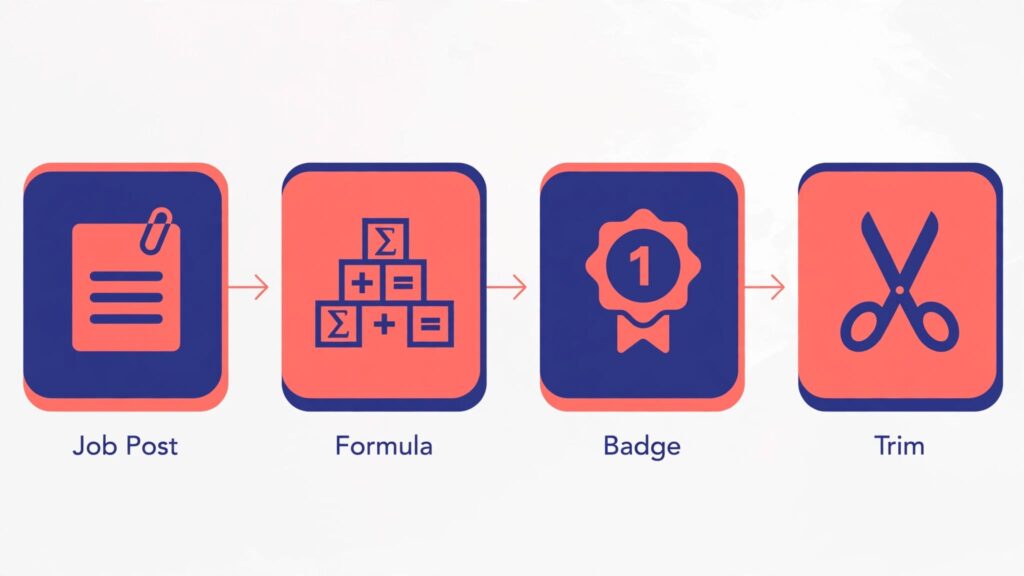
Step 3: Add one proof point
A number, a scope, or a concrete result makes you believable. “Managed a shared inbox for a team of eight” works even if you don’t have percentages.
Step 4: Cut and tighten
Remove filler words like “hard-working,” “passionate,” and “results-driven” unless you back them up. Keep the final version between 30 and 60 words.
20 Resume Summary Examples
Replace the details with your own facts. Never copy a line that isn’t true for you.

For freshers and students (no experience)
- Business graduate: “Recent business graduate with strong Excel and presentation skills, seeking an entry-level marketing assistant role where I can support campaigns and learn quickly.”
- Computer science graduate: “Computer science graduate with hands-on experience building responsive websites in HTML, CSS, and JavaScript through academic projects, looking for a junior developer position.”
- Commerce student: “Final-year commerce student with coursework in accounting and a record of managing event budgets for a university society, seeking an accounts assistant internship.”
- Education graduate: “Education graduate with six months of classroom teaching practice and strong lesson-planning skills, seeking a primary school teaching assistant role.”
- Volunteer-focused fresher: “Motivated graduate with two years of volunteer coordination experience and clear written communication, seeking an entry-level administrative role.”
For career changers
- Teacher to HR: “Former secondary school teacher with eight years of experience in training, coaching, and conflict resolution, moving into HR coordination to support onboarding and employee development.”
- Retail to customer success: “Retail supervisor with five years of experience leading a team of ten and resolving customer issues, now targeting customer success roles in software companies.”
- Accountant to data analyst: “Accountant with six years of reporting experience and advanced Excel skills, completing a data analytics certificate and seeking an analyst position.”
- Hospitality to operations: “Hospitality manager with seven years of experience in scheduling, vendor coordination, and budget control, seeking an operations coordinator role.”
- Journalist to content marketer: “Reporter with four years of experience writing on deadline and editing for web, transitioning into content marketing with a focus on clear, search-friendly writing.”
For experienced professionals
- Project manager: “Project manager with nine years of experience delivering software and marketing projects on time across teams of up to 15, skilled in Agile planning and stakeholder communication.”
- Sales executive: “Sales executive with six years of B2B experience, consistently exceeding quarterly targets and building long-term client relationships across retail and logistics sectors.”
- HR generalist: “HR generalist with seven years of experience in recruitment, payroll coordination, and policy updates for a 200-person company, focused on reducing time to hire.”
- Graphic designer: “Graphic designer with five years of experience creating brand identities and social campaigns, proficient in Adobe Illustrator and Figma, known for fast turnaround and clean layouts.”
- Operations manager: “Operations manager with ten years of experience streamlining warehouse workflows, managing a team of 25, and cutting order errors through simple process checks.”
For remote workers and freelancers
- Virtual assistant: “Virtual assistant with three years of experience managing calendars, inboxes, and travel for busy executives across time zones, using Google Workspace, Slack, and Asana.”
- Remote customer support: “Remote support agent with four years of experience handling chat and email tickets, known for clear writing and a high customer satisfaction record.”
- Freelance writer: “Freelance writer with five years of experience producing blog posts and product copy for small businesses, skilled in research, editing, and meeting tight deadlines.”
For senior and returning candidates
- Senior manager: “Finance manager with fifteen years of experience in budgeting, forecasting, and audit preparation, leading a team of eight and improving month-end close speed.”
- Returning after a career break: “Marketing coordinator with four years of experience in email campaigns and social media, returning after a two-year career break with an updated analytics certificate and a ready portfolio.”
If you want to try different layouts, our resume templates already have a summary section built in.
Common Mistakes When Writing a Resume Summary

- Being too generic. “Hard-working professional seeking growth” fits everyone, so it helps no one.
- Writing in first person. Skip “I am” and begin with your role or strength.
- Making it too long. More than four lines turns it into a second resume.
- Listing only adjectives. Back every claim with a skill, tool, or result.
- Using the same summary for every job. Adjust two or three keywords per application.
- Including clichés. Phrases like “team player” or “think outside the box” rarely add value.
Tailoring Your Summary to Each Role
A strong summary is flexible. Keep a master version, then swap in the job title, tools, and top skills from each posting. This takes about five minutes per application.
Browse current job listings in your field and note which skills repeat. Those are the words to mirror. If you’re switching fields, our career change guide explains how to translate old experience into new-role language.
Where the Summary Fits on Your Resume
Place it directly below your name and contact details, above Work Experience. Use a clear heading such as “Summary” or “Professional Summary” so ATS software recognizes it.
If you’d rather not format everything by hand, our resume builder lets you add a summary and keep a clean, parser-friendly layout.
Quick Checklist Before You Hit Send

- Does it name your role or target role?
- Does it include two or three relevant skills or tools?
- Does it contain at least one proof point?
- Is it under 60 words?
- Are all claims true and easy to defend in an interview?
Frequently Asked Questions
How long should a resume summary be?
Aim for two to four lines, or roughly 30 to 60 words. Shorter is better if every word earns its place.
Should I use a summary or an objective?
Use a summary if you have relevant experience. Use an objective if you’re a fresher or changing fields and need to explain your goal.
Can I use the same summary for every application?
You can start from one master version, but adjust the job title and key skills for each role. Small changes make a visible difference.
Do I need to know how to write a resume summary if I’m using a template?
Yes. A template gives you the layout, but the wording is still your job. A clear summary is what makes the template work for you.
Conclusion
Knowing how to write a resume summary comes down to one idea: show who you are, what you do well, and what you want, in a few honest, specific lines. Use the formula, add a proof point, and trim everything that doesn’t help.
Pick one of the 20 examples closest to your situation, rewrite it with your own facts, and add it to your resume today. Then send that updated resume to one role you really want. When the interview call comes, our interview guides will help you prepare.