


- Step 1: Ensure Your Brass is the Real Deal
- The Magnet Test
- The Scratch Test
- 3 Simple Methods to Age Your Brass Door Knobs
- Method 1: The Classic Vinegar and Salt Solution
- Method 2: The Hard-Boiled Egg Trick
- Method 3: Commercial Brass Agers
- Preserving the Perfect Finish
- The Living Finish (Leave it Raw)
- The Locked Finish (Seal It)
- Conclusion
- Frequently Asked Questions
- Can I age brass without removing the lacquer?
- What happens if I make the brass too dark?
- Will the aged finish rub off on my hands when I open the door?
- How long does it take to age brass naturally without chemicals?
How to Age Brass Door Knobs for a Lived-In, Vintage Look
There is a distinct, tactile poetry in a home filled with time-worn details. While high-shine, polished brass hardware certainly has its place, it can sometimes feel a bit too sterile whispering of a cold showroom rather than a warm, soulful sanctuary. For interior designers and historic home dreamers alike, aged brass offers a depth, richness, and personality that modern finishes simply cannot replicate. Its subtle shifts in tone and softened edges tell a story, catching the daylight in surprising ways and instantly grounding a room.
If your current hardware looks a little too bright and new, you don’t have to wait decades for nature to take its course. Here is your complete guide on how to age brass door knobs quickly and safely using approachable, everyday ingredients.
Step 1: Ensure Your Brass is the Real Deal
Before you gather your supplies and dive into the fun part, you need to verify that your hardware is actually capable of oxidizing. Only solid, unlacquered brass will develop a beautiful, authentic patina. A lot of modern hardware looks like brass but is actually a completely different metal underneath.
To save yourself time and frustration, try these two quick tests:
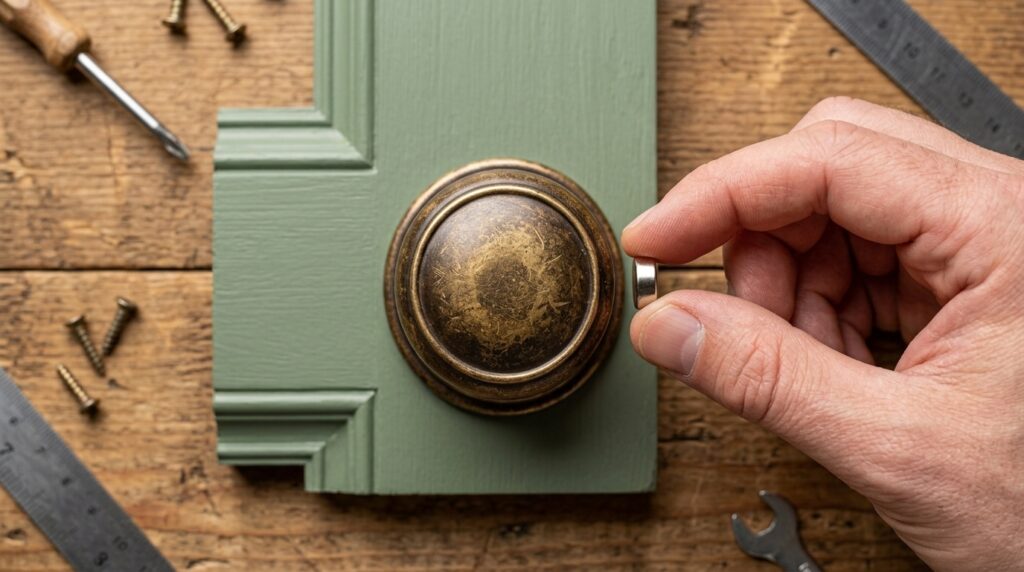
The Magnet Test
Place a refrigerator magnet against your hardware. Solid brass is non-ferrous, meaning the magnet will not stick to it at all. If the magnet clings tightly to the knob, you are dealing with iron or steel that has been given a very thin brass plating. Unfortunately, plated metals do not age well with DIY methods and will often just rust or peel.
The Scratch Test
Find a hidden spot on your hardware, like the back of the rosette plate that sits flush against the wood of your door. Take a sharp pin or the edge of a blade and give it a light scratch. If you see a warm, golden hue underneath the scratch, congratulations it’s solid brass! If you see a silver or dull gray metal peeking through, it is plated.
Crucial Warning: Most modern brass hardware is coated in a clear, protective factory lacquer designed specifically to stop oxidation in its tracks. If your door knobs are incredibly shiny, you must strip this clear coat first. Simply soak the hardware in acetone (or a commercial paint stripper) for 10 to 15 minutes, then scrub it gently with fine steel wool until the shiny barrier is completely gone. Rinse it well and dry it before moving to the next step.
3 Simple Methods to Age Your Brass Door Knobs
Once you have raw, clean, unlacquered brass, you are ready to accelerate the aging process. Choose the household method that best fits the mood and tone you want to achieve for your doors.
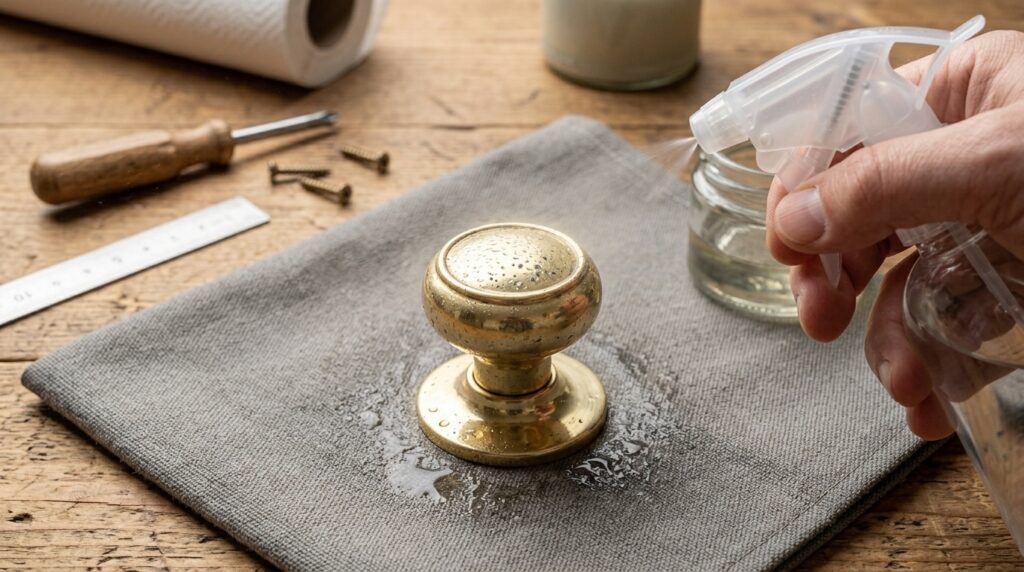
Method 1: The Classic Vinegar and Salt Solution
Best for: A classic, rich, multidimensional bronze patina.
This is the most popular method because it mimics the natural aging process beautifully but condenses years of weathering into less than an hour.
- Prep the Solution: Dissolve 1 tablespoon of regular table salt into 1 cup of standard white vinegar. Stir it until the salt is completely dissolved.
- Apply to the Brass: You have two options here. For a highly uniform, dark look, you can submerge your door knobs directly into the liquid. If you prefer a more organic, uneven, and textured look, pour the liquid into a spray bottle and mist the knobs lightly.
- Watch and Wait: Let the solution do its magic. Within 30 minutes to an hour, you will see a dark, moody tarnish begin to bloom across the metal.
- Rinse and Stop: The second the brass reaches a shade you love, rinse the hardware thoroughly under warm running water. This stops the chemical reaction completely. Pat it dry with a soft cloth do not rub too hard, or you might buff away the fresh patina.
Method 2: The Hard-Boiled Egg Trick
Best for: A gentle, subtle, and beautifully muted dull-gold glow.
It sounds a bit strange, but sulfur gas is an incredibly effective natural oxidizer. Eggs are packed with sulfur, making them a safe, chemical-free way to give your hardware a gentle antique finish.
- Boil the Eggs: Hard-boil 2 or 3 eggs.
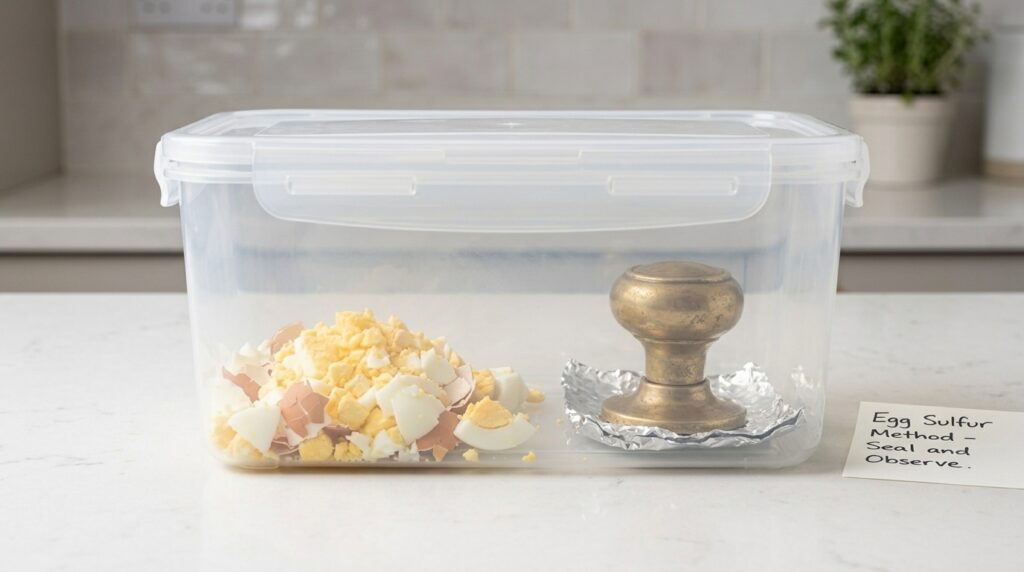
- Mash Them Up: Chop or mash the hot eggs (including the yolks and the shells) and place them into the bottom of a sealable plastic container or a large zip-top bag.
- Suspend the Brass: Place your dry brass knobs into the container. Crucial rule: Ensure the brass does not physically touch the eggs. You want the rising sulfur gas to do the work, not the wet egg residue. You can prop the knobs up on a small piece of aluminum foil or a plastic bottle cap.
- Seal and Monitor: Close the container tightly to trap the gas inside. Check back every 20 to 30 minutes. Within a few hours, the trapped sulfur will coax out a gorgeous, deep, museum-quality warmth.
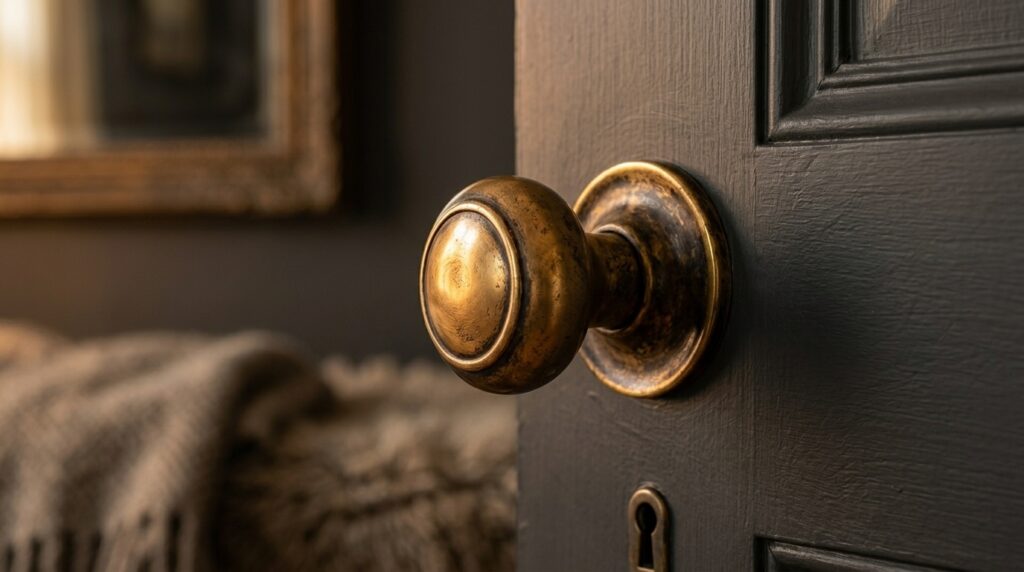
Method 3: Commercial Brass Agers
Best for: Instant, dramatic results.
If you are working on a large project and don’t want to wait around, you can head to your local hardware store and purchase a commercial “brass ager” or “antique developer” liquid.
Simply wear rubber gloves, use a small brush or rag to wipe the solution onto the bare metal, and watch it darken almost instantly. The moment it hits the perfect tone, dunk it into a bucket of clean water to neutralize the acid.
Preserving the Perfect Finish
After exploring how to age brass door knobs, you have to decide how you want the metal to live in your space moving forward. You have two distinct paths:
The Living Finish (Leave it Raw)
If you do nothing and leave the brass completely raw, it will continue to evolve alongside your home. Over months and years, the brass will absorb the natural oils from your hands. The spots you touch every single day to open the door will buff down to a bright, golden glow, while the hard-to-reach crevices will remain dark and moody. This creates a stunning, authentic “living finish.”
The Locked Finish (Seal It)
If you’ve hit the absolute perfect shade of antique bronze and you want it to stay exactly like that forever, you need to lock it in. Once the hardware is 100% dry, buff a very thin layer of high-quality finishing wax (like Renaissance Wax or paste wax) onto the surface with a microfiber cloth. Alternatively, you can spray them with a matte clear coat lacquer.
Conclusion
Aging your own hardware is one of the most rewarding, high-impact DIY projects you can tackle in a weekend. It takes a featureless, mass-produced item and gives it an immediate sense of history, weight, and character. Whether you choose the quick mist of a vinegar spray or the slow magic of a sulfur bath, you are stepping away from the sterile look of a modern showroom and stepping into a home that feels intentionally curated and deeply personal.
Frequently Asked Questions
Can I age brass without removing the lacquer?
No. The entire purpose of factory lacquer is to seal the metal and protect it from oxygen. If you try to apply vinegar, salt, or sulfur to a lacquered knob, the liquid will simply slide off without changing the color of the metal. You must strip the lacquer first using acetone.
What happens if I make the brass too dark?
Don’t panic! The beauty of solid brass is that the process is completely reversible. If your door knobs turned out much darker than you wanted, take a bit of fine steel wool or a commercial brass polish (like Brasso) and scrub the hardware. It will quickly buff back down to its original bright, shiny gold state, allowing you to try again.
Will the aged finish rub off on my hands when I open the door?
If you rinse the hardware thoroughly after aging it, the dark patina will not rub off onto your hands or clothes. However, over time, the friction of your hands will naturally wear down the patina on high-touch areas, creating a beautiful weathered look. If you want to prevent this, apply a thin layer of paste wax to seal it.
How long does it take to age brass naturally without chemicals?
If you leave unlacquered brass completely alone, it will begin to dull within a few months just from exposure to the air and the humidity in your home. However, to get a deep, dark, authentic antique look naturally, it usually takes anywhere from 2 to 5 years of daily use.


